
A successful home refurbishment should improve how the property works, resolve existing problems and create a consistent finish. When the budget has limits, the key is to spend in the right order and avoid finishing work that may need to be removed later.
Begin with the building, not the decoration
Before selecting paint colours or flooring, review the condition of the roof, walls, windows, drainage, plumbing, heating and electrics. Signs of damp, movement or water ingress should be investigated before cosmetic work begins. Covering a problem can make the finished room look better temporarily, but it does not protect the investment.
A condition survey and a clear schedule help the client decide which repairs are essential and which improvements can be phased.
Prioritise layout improvements that affect daily life
The most useful refurbishment work often improves circulation, storage and the relationship between rooms. This might involve opening a kitchen into a dining area, creating a utility space, improving access to the garden or turning an underused garage into accommodation.
Any wall removal should be assessed properly. Load bearing walls, chimney breasts and alterations to openings may need structural design, suitable supports and building control involvement. The layout should also be tested against realistic furniture, kitchen units and door swings.
Coordinate services before plastering
Electrical points, lighting, plumbing, heating and data should be agreed while walls and ceilings are accessible. Think about where appliances, televisions, desks, mirrors and furniture will sit. It is cheaper and cleaner to position services correctly before boarding and plastering than to cut into newly finished surfaces.
Bathrooms and kitchens need particular coordination because several trades work in a relatively small area. Final product information should be available in time for pipework, power supplies and support details to be installed correctly.
Invest in the rooms that carry the most use
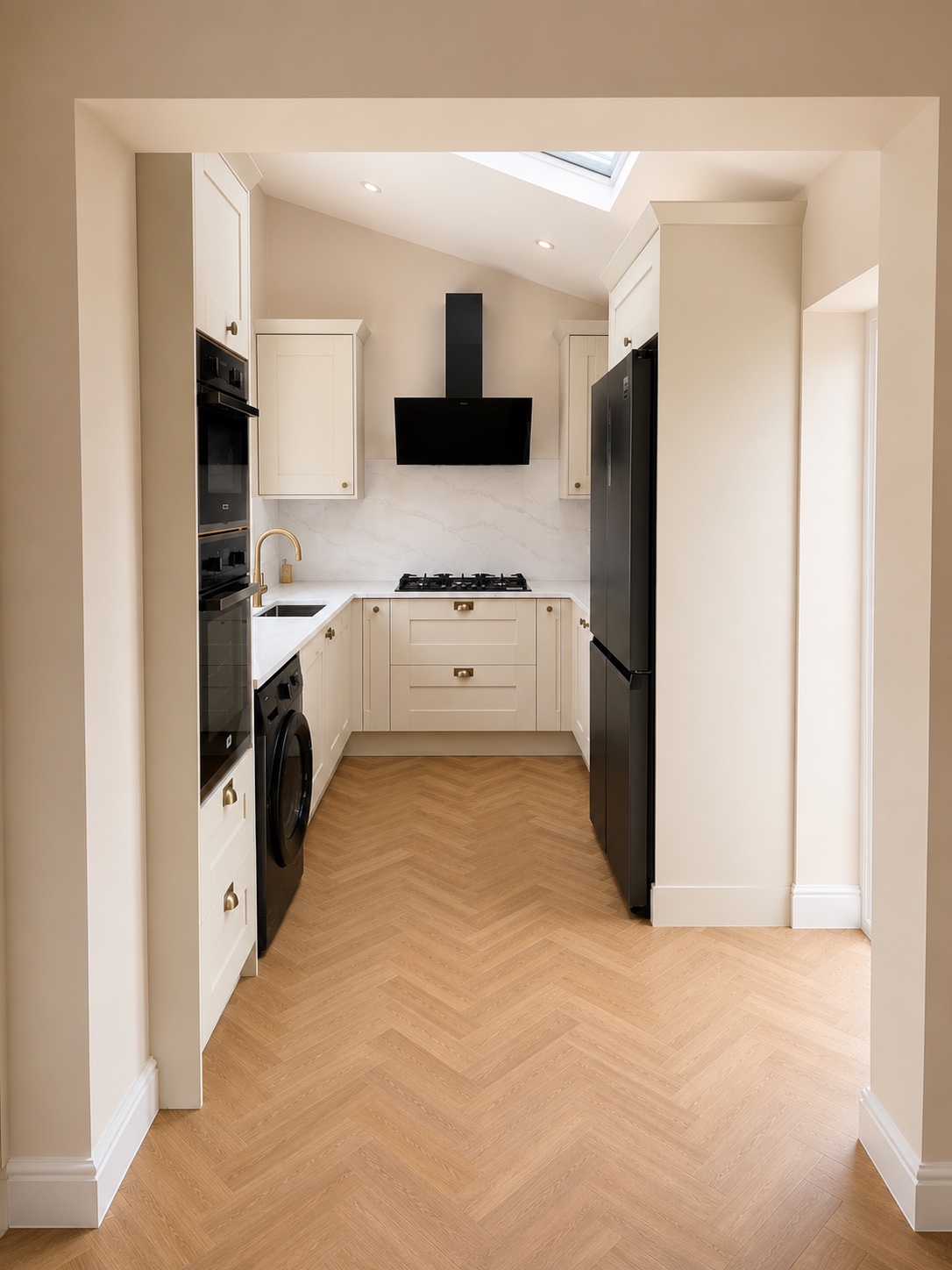
Kitchens, bathrooms and main living spaces usually work hardest. Durable flooring, practical storage, suitable ventilation and good lighting can matter more than a costly feature that has little effect on daily use.
A good specification balances appearance with maintenance. Consider how easily surfaces can be cleaned, whether replacement parts are available and how finishes will age in the household or rental setting.
Use a consistent finish across the property
Refurbished homes feel more considered when doors, ironmongery, skirting, sockets, colours and floor transitions have been planned together. Consistency does not mean every room must look identical. It means the details relate to one another and changes between areas feel deliberate.
Agree sample colours and key finishes under the property’s actual lighting. Photographs and small samples can look different when used across a full wall or room.
Keep energy performance in the conversation
Refurbishment can be an opportunity to reduce draughts and improve comfort. Depending on the property and scope, measures may include insulation, heating controls, efficient lighting, improved glazing or attention to gaps around doors and service penetrations.
Ventilation should be considered alongside insulation. Kitchens, bathrooms and occupied rooms need appropriate airflow to manage moisture and maintain a healthy internal environment.
Build the budget around a defined scope
A quotation is easier to manage when it is tied to drawings, a schedule of work and a record of who supplies each item. Separate fixed work from provisional allowances and client supplied products. Include waste removal, protection, preparation and making good, as these can be overlooked when comparing headline prices.
Keep a contingency for genuine unknowns, particularly in an older property where the condition behind finishes cannot be confirmed at the start.
Think about the property’s future use
A family home, rental property and property prepared for sale may justify different choices. A homeowner may prioritise a bespoke layout and long term finishes. A landlord may need durability, straightforward maintenance and compliance. A sale refurbishment may focus on resolving defects and presenting a clean, coherent home without excessive personalisation.
No refurbishment can guarantee a particular uplift in value. Decisions should reflect local demand, the condition of comparable properties and the cost of the proposed work.
Plan the sequence before work begins
A typical refurbishment moves from surveys and strip out through structural work, first fix services, plastering, second fix, decoration, flooring and final installation. The exact order changes with the project, but a written programme makes dependencies visible and helps coordinate items supplied by the client.
Planning a property refurbishment in Leeds?
Fortis Developments delivers complete and partial refurbishments for homeowners, landlords and property investors. Explore our property refurbishment service and completed residential work.